
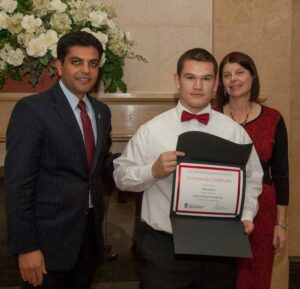
In 2016, when he graduated from the NIU College of Engineering and Engineering Technology’s Department of Engineering Technology, Alex Dawson received the Outstanding Student Award for Energy and Environmental Systems Engineering Technology.
Since then, he’s worked at an impressive lineup of highly respected corporations: Hormel Foods, General Mills, Eli Lilly and, since the start of this year, Mondolēz International, one of the world’s largest snacks companies.
Over that span, his career has largely focused on technical and project leadership within food manufacturing. Early this year, however, that changed, as he brought his technical background over to the company’s safety function.
In that role as process safety engineer, Dawson supports seven North American sites for Mondolēz as he oversees a host of areas, including fire protection, gas-fired equipment, combustible dust, ammonia refrigeration, hazardous and flammable chemicals, boilers, and electrical safety.
He recently answered some questions about his journey.
When you enrolled at NIU, what was your career plan?
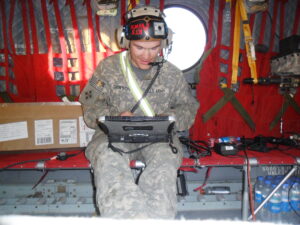
After serving in the Army for three years—my job was to repair electrical systems on Black Hawk and Chinook helicopters—I had enrolled at Elgin Community College in a trade program for heating and air conditioning. I was at the top of my class and knew I wasn’t challenging myself enough. CEET was a bridge between my bias for action in the trades and my need for more theory in engineering.
What’s the most important lesson you gained from your NIU experience?
I am not working in a field that’s seemingly related to the degree that I studied, but it shows how much you can apply what you learn at CEET, especially in the TECH (Engineering Technology) department, in different ways.
My career has gone from being a lead process engineer and I led utilities maintenance, then utilities engineer within pharma, and now within the health and safety field. A lot of my cohort did energy auditing. There’s so many different ways you can apply your education, especially manufacturing, if you learn the fundamentals correctly.
At what point did this sink in for you—that you had this foundation that gave you this ability to go down a variety of career avenues?
At first, I felt a little regretful that I hadn’t gotten a mechanical engineering degree. I would see job postings where they exclude anyone with anything but that degree.
Then I was placed in a utility space in project manufacturing in pharma and I stood out in a really challenging role. It was then that I realized that my degree had set me up for success; it took being in a very challenging role to see that.
What is it about your path that has enabled you to flow into these new areas of responsibility?
At NIU, I learned how to learn in a systematic way: You figure out in any given body of knowledge what’s most relevant to that function or that degree and you’re able to disseminate it, and then apply it really quickly. That kind of analytic approach is what you learn from reading all the types of books that are part of the CEET curriculum.
From your time at NIU, what stands out from your classes and overall experience?
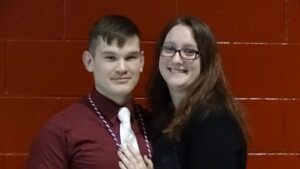
In addition to meeting my wife Lauren—she was in the College of Business—what stands out is the variety of classes that you get as a student, whether it was Associate Professor (Ted) Hogan’s safety classes, Associate Professor (Kevin) Martin’s energy thermodynamics class that was so challenging, or so many of the others.
Every class that I went to, I could tell that there was a career path I could go down. Even if something wasn’t in my declared degree, I could see the great job prospects that came with it. I’d think, `I could see myself doing this…I could see myself doing this.’
The great diversity of coursework allows you to speak different languages across a variety of disciplines. That’s so important in business.
What do you see for yourself in the coming years?
Eventually, I can see myself growing into a role as global process safety director. This is largely due to the cross-functional nature of process safety. At the same time, something I learned very early on: Your career is based on a mix of business need, your own preparedness and being available when the opportunity presents itself.
What qualities do you feel are most important to bring to one’s career?
Being open and engaged are two of the most important qualities you can have. I stopped making five- and 10-years plans because I realized in business you wear many different hats, so you have to give everything you’ve got to what you’re doing now.

People spend way too much time thinking about what they’re going to be doing in 10 years instead of soaking in what they should be doing now. Anyone coming out of college, I’d emphasize to them the importance of enjoying—and learning from—this moment now.
As an example: If you are an entry-level maintenance supervisor, don’t think ahead to what you’ll be doing as a plant manager someday. Learn the fundamentals of what it takes to be a successful maintenance supervisor. Then do the same in your mid-career role, in your lateral move, and so on.
Before you know it, you will be the sum of your parts: a great leader with many experiences to draw on.
